2023–2024 / MGID · ADTECH
Driving smarter advertising for 850M+ monthly users
Senior Product Designer · Teams: Advertiser, Publisher, Compliance & Antifraud
End-to-end feature design · User research · Design systems · A/B testing · Post-release data analysis · Iterative improvements
Improved the advertiser journey across campaign creation, management, targeting, and integrations, reducing friction in complex workflows and supporting more efficient campaign setup and optimization.
MGID connects advertisers running campaigns with publishers monetizing content across their websites. Designing for both sides meant balancing advertiser control and performance with publisher revenue and audience trust.
Advertisers
Launch and optimize campaigns.
MGID platform
Matches campaigns with audiences and publisher placements through AI and real-time bidding.
Publishers
Monetize content through native ad placements.
My work spanned campaign management, tracking, integrations, and native ad formats, improving core workflows while accounting for the needs of both sides of the platform.
Designing scalable advertiser workflows
CHALLENGE Advertisers manage performance, budgets, tracking, and traffic controls in one data-heavy platform. As MGID evolved, new capabilities had to fit into existing workflows without making frequent tasks harder to complete.
I designed advertiser-focused features to improve campaign management, performance tracking, integrations, and targeting precision. My goal was to help advertisers launch, optimize, and scale campaigns efficiently while making data-backed decision-making intuitive and accessible.
Campaign management
Managing campaigns at scale
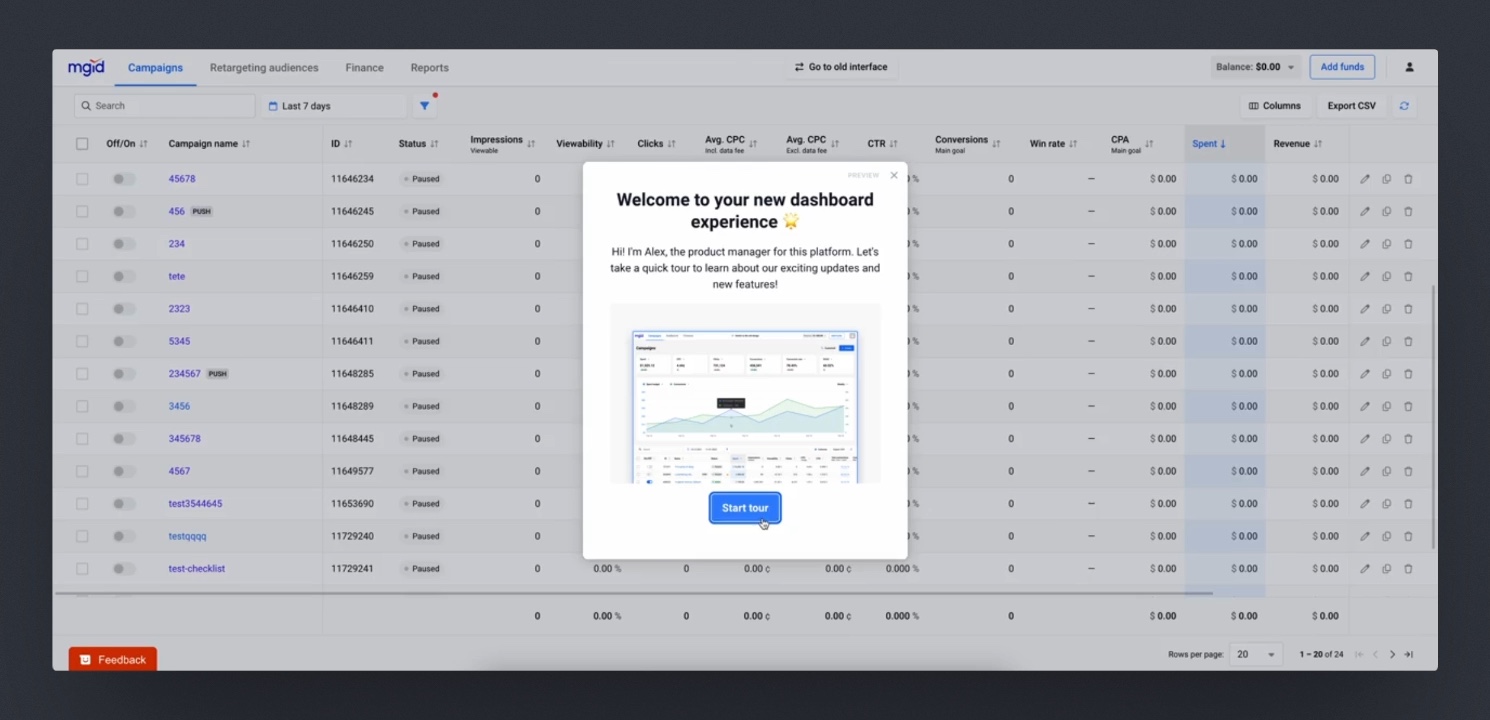
The dashboard combined real-time performance analytics, budget tracking, and targeting controls in one data-heavy workspace.
Working with the team, I improved frequent workflows through smarter filtering, bulk actions, CPC controls, and clearer budget tracking.
Tracking & integrations
Simplifying performance tracking
The platform supported pixels, postbacks, webhooks, UTM parameters, conversion goals, and native integrations.
I simplified how these methods were organized and configured, reducing manual setup and making campaign performance easier to track.
Transparency & control
Giving advertisers greater control
Advertisers needed greater visibility into campaign placements and more control over traffic quality, brand safety, and spend.
I designed bid adjustments and blocklist tools across placements, geographies, devices, and traffic sources.
Designing 60+ native ad formats
CHALLENGE Publishers needed ad formats that generated revenue and remained visible without disrupting how people consumed content. Different page structures, customization needs, and monetization goals made one fixed format impossible to scale.
I led the end-to-end design of 60+ native ad widget formats, balancing monetization, visibility, and engagement while integrating ads naturally into publisher content.
Using heatmaps, session recordings, performance analytics, A/B testing, and publisher feedback, I evaluated how placement and presentation affected engagement. I also built MGID’s widget design system from scratch, turning recurring design decisions into reusable rules for creating and adapting new formats across publisher platforms.
Smart widgets
Optimizing formats for engagement
Publishers needed ad formats that could adapt to different content environments and audience behaviors while keeping recommendations relevant and engaging.
I designed flexible, AI-powered widget layouts that adjusted content hierarchy and presentation to improve engagement while supporting publisher monetization.
Native placements
Preserving the reading experience
Ads needed to remain visible and effective without disrupting how people consumed content on publisher websites.
I designed native placements that integrated recommendations into the reading flow, balancing ad visibility and engagement with audience trust.
KEY LESSON Designing for a two-sided platform meant that no decision could be made in isolation. Improving advertiser control could affect publisher monetization and audience trust, so the strongest solutions came from evaluating each change across the entire ecosystem.
What changed my approach
Behavioral research explained user needs, while post-release data showed how solutions performed in real conditions.
What made the work scale
The widget design system turned repeated decisions into reusable rules, making new formats faster and more consistent to deliver.
What I’d explore next
If I revisited the project, I would explore deeper personalization around the distinct jobs-to-be-done of advertisers and publishers.